
Pocket Monster story
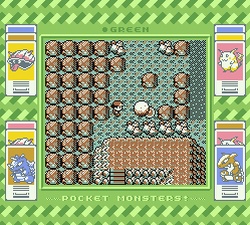
The story of Pocket Monster on the NES isn’t about stage shows and laser light demos; it’s about noisy flea markets, kiosks stamped with Dendy logos, display cases packed with rainbow-bright cartridges, and that look you get when Pikachu suddenly stares back from the cover. In the late ’90s the world rode a wave of Pokémania, and tiny studios from Taiwan and China were busy cramming it into an 8-bit shell on the fly. That’s how this unofficial, stubbornly alive project was born: street-bold, made without blessings, but dialed in to what kids in front of the TV really wanted. The sticker read Pocket Monster, the seller winked—“Pocket monsters, want one?”—and you were already halfway home, booting up the Dendy and waiting for that first pixel-sized lightning bolt.
How it started
The idea was as simple as a controller with no turbo button: give the 8-bit crowd their own “Pokémon story.” Not fussy or bookish—adventurous. Those backroom workshops loved repainting hit worlds for the familiar Famicom architecture, and Pocket Monster arrived as that fan-made bridge: not a menu-heavy RPG trek, but a snappy run-and-jump platformer with sparks and unmistakable silhouettes. Inside were rough seams and little miracles—the kind you get when you build on passion instead of a template. No big names, no press kits, no roadmaps—just one goal: that on first boot you’d grin and say, “There they are—Pokémon on Dendy.”
How it got to us
Pocket Monster reached our living rooms the way every famiclone kid remembers: jam-packed multicarts—“4 in 1,” “8 in 1,” and, of course, the mythical “9999 in 1.” On one cartridge it might be “the little bird that shoots lightning”—that’s what the stall called it. Right next to it sat the same game with a different sticker: Cyrillic “Покет Монстер,” and in another booth—“Pokémon on Dendy.” Around the block it traveled as “pocket monsters,” for a kid brother it was just “Pikachu.” We didn’t argue canon—we negotiated turns and who got to take the cart home. That was the magic of bootleg runs: every batch tweaked something—the intro, the text, the difficulty—so it felt like tiny reissues, as if the game kept shedding skin and coming back to the console.
Why we loved it
Pocket Monster hooked you with that “just one more level” impulse. It was that rare kind of 8-bit adventure that runs on pure momentum: a dash of arcade, a hint of danger, and a generous scoop of kid imagination. You crossed pixel meadows, recognized familiar critters from a glance, and waited for the moment to drop a lightning bolt right on time. If you were collecting Pokémon stickers and catching the cartoon on weekends, this was your chance to carry that feeling onto your home console. And who cared that no big publisher flashed in the credits: to us it was “our” game—straight-up “Pokémon on Dendy,” the one that spun stories about secret paths, “look, that’s the boss,” and “trade you the cart for a week?”
Many faces of one game
Pocket Monster had its own street folklore. Someone got a build with English text, someone else—with hilariously broken Russian flashing “start” and “game,” and a third had a half-Cyrillic, half-English salad. Sometimes the sprites changed, sometimes the hero’s speed, sometimes the multicart booted it from a different stage—and the yard instantly minted legends: “mine’s harder,” “mine has more lives,” “mine’s got different music.” In the Dendy era that was normal: unofficial ports lived their own life, and that very fluidity is why Pocket Monster stuck in memory not as just another pirate romhack, but as an 8-bit classic with the smell of warm plastic and a rough, sandpapery sticker.
A mark that stayed
Years passed; names on boxes faded, stickers bleached, carts moved from drawer to drawer—but the line stuck: “Can you bring Pocket Monster?” And you knew they meant the cart where a crackle of electricity mattered more than long dialogues. For some it was the first meeting with “pocket monsters,” for others—a way to stretch that Pikachu on a T-shirt straight onto the TV screen. Today we remember Pocket Monster not by bullet lists, but by a vibe: morning light, console on, click—and you’re already in a world built by underground studios and carried to our hearts by backyard culture. It’s not an official chapter of a giant franchise, but on our shelf it owns its spot—next to the warm, no-pretense things that quietly made us gamers. Pocket monsters, Pocket Monster, “Pokémon on Dendy”—call it whatever; it’s the same spark that makes you smile and press Start.